New York City’s pied-à-terre tax was supposed to freeze out the ultra-wealthy. Politicians announced it with fanfare.
Industry voices warned of catastrophe.
But roughly a month after the New York State Legislature passed the measure, the luxury housing market in Manhattan hasn’t flinched — at least not yet.
On May 26, lawmakers enacted an amendment to Article 30-C of the New York State Tax Law. The change targets owners of city homes that aren’t listed as primary residences — second, third, or fourth properties sitting in the portfolios of the world’s richest buyers. Mayor Zohran Mamdani and Governor Kathy Hochul pushed it as a way to fund services like free child care and cleaner streets.
Related: Designing Your Perfect Home: How to Choose Functional and Stylish Living Room Furniture in Cerritos
Implementation comes in two phases.
The first, running July 1, 2026, through June 30, 2028, levies rates between 4 percent and 6.5 percent on properties assessed at $1 million or more. The second, from July 1, 2028, to June 30, 2031, imposes a yearly fee on second homes valued over $5 million. The law sunsets at the end of that window.
City Comptroller Mark Levine’s office estimates the measure will generate $500 million in revenue, after adjusting for the gap between assessed and market values on co-ops and condos.
Industry Pushback Was Swift and Loud
Real estate professionals have not been quiet about their objections. Bob Knakal, chairman and CEO of BK Real Estate Advisors, wrote in the outlet that the tax “may ultimately prove to be one of the most disruptive pieces of real estate legislation New York state has passed in years.” Others echoed that concern, warning the city could lose its appeal to the global elite who pump money into local restaurants, retail, and cultural institutions.
Related: What You Need To Know
Alexander Goldfarb, a managing director at Piper Sandler, questioned the logic of singling out non-resident property owners. “These people are willing to spend a lot to buy an apartment in New York, and they tend to be big spenders,” he said. “They’re going to be doing everything that pumps a lot of money into the economy.”
The Ken Griffin Video Changed Everything
What really set things off wasn’t the legislation itself.
It was a video.
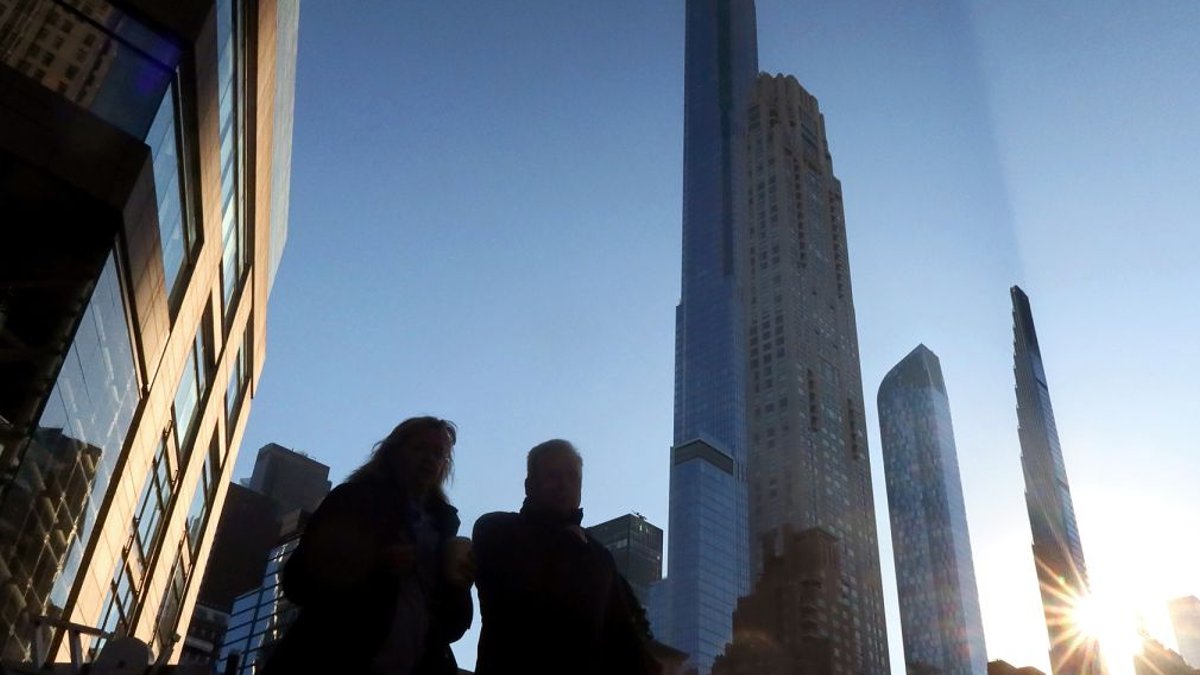
Mamdani stood outside 220 Central Park South, the tower where Citadel founder Ken Griffin owns a penthouse he purchased for $238 million. In the clip, the mayor looked up at the building and declared it was time for “the richest of the rich” — people who store wealth in the city’s real estate but don’t live here full-time — to contribute more. The video sparked a public feud. Griffin’s company subsequently cast doubt on whether it would proceed with a planned 1.9 million-square-foot office tower at 350 Park Avenue, a project being developed in partnership with Rudin and Vornado Realty Trust.
Related: Used Cars For Sale Across The Country
Several attorneys and accountants noted an irony: had the mayor kept quiet, it might have slipped through without much notice. “If the mayor had kept this quiet, and didn’t point out to the people where Griffin lives, and made a big deal out of it, it probably would have gone under the radar,” said Stuart Saft, a partner at Holland & Knight. Nicholas Rochedieu, a partner at PKF O’Connor Davies, agreed. “I think had it been quiet and people realized this is just an incremental add, it wouldn’t have made headlines,” he said.
The Market Hasn’t Budged — Yet
Between May 25 and June 21, 2026, there were 131 contracts signed for Manhattan residential properties valued at $4 million and above, according to Olshan Realty’s weekly reports. During the same stretch in 2025, the number was 126. The week of May 25-31 saw 32 contracts, three more than the prior week. The first full week of June brought 36.
Saft cautioned that the numbers don’t tell the full story. “The tax only was enacted two weeks ago, and it’s effective July 1,” he added. “So, people who already had contracted to buy an apartment couldn’t back out in two weeks. The question is, what’s going to happen in the next six months?” He expects development of high-end condos to slow. Affordable residential construction has already been suppressed by labor and regulatory costs, and upscale projects were the one segment still moving. The new levy could squeeze that further.
The new surcharge hasn’t scared buyers away from closings already in motion. Whether it reshapes future deals and towers remains unknown.